
How to Care for Magnetic Vehicle Signs: Fitting, Cleaning and Storage Guide

Magnetic vehicle signs are a practical and flexible way to add professional branding to cars and vans without committing to permanent vehicle graphics. They can be fitted when needed, removed when not in use and stored ready for the next time you need them.
But to keep your magnetic signs looking their best, regular care is important. Dirt, trapped moisture, extreme temperatures and incorrect storage can all affect the condition of the signage and potentially the vehicle surface underneath.
Here’s how to correctly fit, clean, maintain and store your magnetic vehicle signs.
Will Magnetic Signs Stick to Your Vehicle?
Magnetic signs need a flat, clean, metal surface to hold securely.
Most car and van doors are steel and will hold a magnetic sign without issue. However, some vehicles use aluminium, plastic or composite body panels, which are not magnetic. This is increasingly common on newer vans and on certain panels such as bonnets and tailgates.
Magnetic signs also will not adhere properly to:
Vinyl-wrapped surfaces
Rusted or damaged panels
Sharply curved or creased areas
Gentle curves are usually fine, but the sign needs maximum contact with the surface to stay put. If you are unsure whether your vehicle is suitable, a simple test with a fridge magnet on the intended area will confirm whether the panel is magnetic.

How Do You Prepare a Vehicle for Magnetic Signs?
Before fitting magnetic signage, both the vehicle surface and the back of the magnetic sign must be completely clean and dry.
Check the edges of the sign for any lumps, bumps or damage before application. An uneven or damaged edge can allow air and moisture underneath the sign, which could cause it to lift or become damaged.
Never apply magnetic vehicle signs to a surface that is:
Wet or dirty
Frozen or frosted
Hot
Covered in road film or debris
Extra care should be taken with metallic and new paint finishes. Recently repainted surfaces should be avoided for around three months and polished before magnetic signage is fitted.
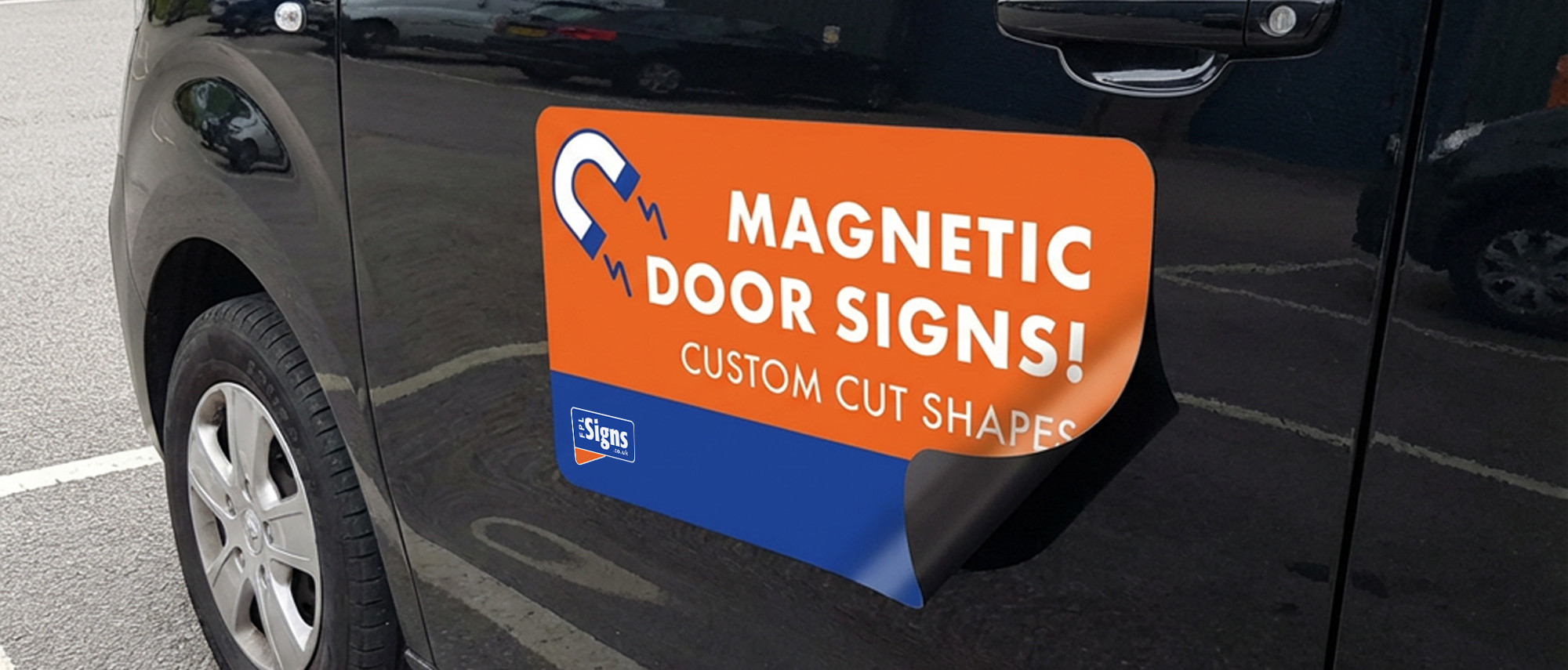
How Should You Apply a Magnetic Sign to a Vehicle?
Correct application helps your magnetic sign sit flat and securely against the vehicle.
Start at one edge and let the rest of the magnet settle naturally against the surface rather than pressing it down all at once.
Once fitted, rub over the sign to make sure the entire magnetic surface is sitting flat against the vehicle.
If the corners begin to lift or curl over time, this is usually a sign that dirt has built up underneath or that the sign has been stored badly. Remove it, clean and dry both surfaces, and allow the sign to flatten out before refitting.
Magnetic signs are not recommended for vehicle bonnets due to the combination of heat, curvature and airflow.

How Often Should You Remove Magnetic Vehicle Signs?
Magnetic vehicle signs should be removed at least once a week so that both the back of the sign and the vehicle surface can be cleaned and dried.
In wet weather you will need to remove them more often. Signs should be taken off and dried after rain, with daily removal recommended during periods of heavy rain.
They should also be removed during sleet and snowy conditions.
Regularly removing your signs also allows natural sunlight to reach the vehicle paintwork more evenly.

Can You Leave Magnetic Signs on a Vehicle in the Rain?
No - magnetic signs should be removed and dried rather than left on in wet weather.
Moisture can collect between the magnetic sign and the vehicle. If left unchecked, this moisture can enter the material and potentially cause blistering, which permanently damages the sign.
After rain, remove the sign and thoroughly dry both the magnetic surface and the vehicle before refitting it.

How Do You Clean Magnetic Vehicle Signs?
Cleaning magnetic vehicle signs is relatively straightforward.
Use warm water and a mild detergent to remove dirt and road film from the sign. Avoid solvents, cleaning fluids and harsh cleaning products.
Magnetic signs should be removed before taking the vehicle through an automatic car wash. High-pressure jets and brushes can lift the edges of the sign and force water underneath it.
The vehicle surface should also be cleaned regularly to prevent dirt, grit and other particles becoming trapped underneath the magnet.
Always make sure both surfaces are completely dry before putting the magnetic sign back onto the vehicle.

Do Magnetic Vehicle Signs Damage Paintwork?
Magnetic signs do not damage vehicle paintwork when they are fitted and maintained correctly.
Unlike vinyl graphics, magnetic signs use no adhesive, so there is no residue to remove and nothing bonded to the paint surface.
Problems only tend to occur when signs are left in place for long periods without removal. Dirt, grit and moisture can become trapped between the magnet and the panel, and over time this can lead to scratching or marking. Leaving a sign permanently in one position can also mean the paint underneath weathers differently to the surrounding panel.
This is why regular removal matters. Taking the sign off at least once a week, cleaning both surfaces and drying them thoroughly before refitting prevents almost all of these issues.
Extra care should be taken with recently repainted vehicles, which should be left for around three months before magnetic signage is applied.

Can Magnetic Signs Be Used in Hot or Cold Weather?
Magnetic signs should be removed during prolonged periods of very hot or sunny weather.
Extreme sunlight should also be avoided when the signs are being stored away from the vehicle.
During cold weather, allow the sign to uncurl naturally in a warm environment before fitting it to the vehicle.

How Should You Store Magnetic Vehicle Signs?
Correct storage can help prevent your magnetic signs from becoming damaged, creased or distorted.
Ideally, signs should be stored completely flat. Alternatively, they can be rolled to approximately a 3-inch diameter with the printed side facing outwards.
When storing magnetic signs:
Keep them at room temperature
Store them away from direct sunlight
Keep them in a clean environment
Do not place heavy objects on top of them
Do not lean heavy objects against them
Store rolled signs upright rather than on their side
Do not store magnetic signs face to face, as this can weaken the magnetic material
Magnetic materials naturally attract particles, so keeping the signs and their storage environment clean is particularly important.

How Long Do Magnetic Vehicle Signs Last?
Lifespan depends far more on how the signs are looked after than on how often they are used. Signs that are removed regularly, cleaned with warm water and mild detergent, dried properly and stored flat away from direct sunlight will stay looking professional for considerably longer.
The most common causes of premature wear are:
Being left permanently on the vehicle
Trapped moisture leading to blistering
Prolonged exposure to strong sunlight
Being stored creased, folded or under heavy objects
A few minutes of maintenance each week will noticeably extend the life of your signage.

How Do You Care for Magnetic Roof Signs?
Magnetic roof signs require similar regular maintenance.
Before fitting a roof sign, make sure the vehicle roof is clean, dry and free from grease, wax polish and ice. The sign should be positioned so that all magnets have maximum contact with the vehicle surface.
The rubber covers around the magnets should also be inspected regularly and replaced if damaged.
Roof signs should be removed during adverse weather conditions, including strong winds and heavy rain. Using an adhesive roof protector can also help reduce the risk of scratching when fitting and removing the sign.

How Fast Can You Drive With Magnetic Vehicle Signs?
At FPL Signs, we test our magnetic vehicle signs at speeds of up to 70 mph. However, this testing does not account for external factors such as headwinds, wind speed or air turbulence.
Drivers should always stay within the legal speed limit and consider current weather and driving conditions.
Before setting off, check that your magnetic signs are sitting completely flat and securely against the vehicle.

Magnetic Vehicle Sign Care Checklist
A few simple habits can make a big difference to the condition and lifespan of your magnetic vehicle signage:
Check your vehicle panels are magnetic before ordering
Keep the vehicle and magnetic surface clean and dry
Check the sign for damage before fitting
Remove and clean signs at least once a week
Remove and dry signs after rain
Never fit signs to hot, wet, dirty, frozen or frosted vehicles
Remove signs during extreme heat and adverse weather
Clean using warm water and mild detergent
Store signs flat or correctly rolled away from direct sunlight
Looking for Magnetic Vehicle Signs?
Magnetic vehicle signs are an excellent option for businesses that need flexible, removable vehicle branding. Whether you use your vehicle for both business and personal journeys or simply want signage that can be easily removed, magnetic graphics provide a versatile solution.
Correct care is key. Regular cleaning, removing your signs during unsuitable weather and storing them properly can help keep them looking professional and performing as intended for longer.
If you're looking for bespoke magnetic signs for your car, van or business vehicle, FPL Signs can help create professional magnetic vehicle graphics tailored to your branding and requirements.
Q: How long do magnetic signs last? With proper care — regular removal, flat storage and a clean application surface — magnetic signs can last several years.
Q: What sizes are available? We offer 600×400mm and 450×300mm as standard, with custom sizing available.
Q: Can they be used on any vehicle? Magnetic signs need a flat or mildly curved metal surface. They won't work on fibreglass, plastic bumpers or heavily curved panels.
Q: Can I supply my own artwork? Yes. We accept print-ready files. If you need design help, just mention it when you request a quote.
Q: Will they damage my van's paintwork? Not if used correctly. Remove them regularly, keep surfaces clean, and avoid leaving them on in hot weather for extended periods.


Comments